• Homepage Design Best Practices: 7 Questions Your Homepage Must Answer

    Homepage Design Best Practices: 7 Questions Your Homepage Must Answer

    Your homepage is often the first impression people have of your business, and in many cases, it is the page that determines whether someone continues exploring your website or leaves within seconds. That is why homepage design best practices are about much more than creating a visually attractive layout. 

    A successful homepage should answer your visitors’ biggest questions immediately, reduce uncertainty, and make it easy for them to take the next step.

    Too many businesses invest heavily in advertising, SEO, or social media only to send visitors to a homepage that creates confusion instead of confidence. A homepage that is difficult to understand can become a barrier between your business and potential customers. On the other hand, one that communicates clearly can increase engagement, improve conversions, and strengthen your entire digital marketing strategy.

    Whether you are planning a complete website redesign or simply looking to improve your website design services, understanding homepage design best practices can help you build a homepage that works harder for your business.

    Instead of chasing design trends, focus on answering the questions every visitor is already asking the moment they arrive.

    Why Your Homepage Has One of the Most Important Jobs on Your Website

    People rarely visit a website just to admire the design. They arrive because they have a question, a challenge, or a goal they want to accomplish. They may be comparing companies, researching solutions, or looking for a business they feel confident contacting. Your homepage serves as the introduction that helps them decide if they have found the right place. If you are planning a complete redesign, our Website Redesign Checklist can help you prepare before making major changes.

    Users scan webpages rather than reading every word from top to bottom. They look for visual cues, headlines, and content that quickly tells them whether the page is relevant to their needs or not. If that information is missing or buried beneath vague marketing language, many visitors simply leave.

    This is why the best homepage design best practices prioritize clarity over creativity. Google also encourages businesses to create content that is helpful, clear, and designed primarily for people rather than search engines. A beautiful homepage is valuable, but only if it also communicates your message quickly and effectively. Every section should help visitors move closer to making a decision rather than forcing them to figure things out on their own.

    Question 1: What Does Your Company Actually Do?

    This may seem like an obvious question, yet it is one of the biggest reasons homepages fail. Many businesses know their services so well that they unintentionally write for themselves instead of writing for first-time visitors. Headlines become clever rather than clear, and people leave without fully understanding what the business offers.

    Your primary headline should explain what your company does in plain language. Visitors should not have to scroll, click through multiple pages, or interpret creative taglines to understand your services. If your homepage immediately explains what you do and who you help, you have already eliminated one of the biggest sources of friction.

    Supporting text beneath the headline should expand on that message by briefly explaining your expertise, your ideal audience, and the outcomes you help people achieve. One or two concise paragraphs often communicate far more effectively than several vague marketing statements

    Question 2: Is This Business Right for Me?

    Once visitors understand what you do, their next question is usually if your company is the right fit for their needs. People naturally look for signs that they have found a business that understands their challenges and has experience solving problems similar to theirs.

    One of the most effective homepage design best practices is speaking directly to your ideal audience instead of trying to appeal to everyone. Specific messaging makes people feel understood. Whether you specialize in healthcare, manufacturing, professional services, home services, or another industry, your homepage should clearly communicate who benefits most from working with you.

    The visuals you choose also contribute to this message. Authentic project photography, recognizable industries, and examples of your work help reinforce that visitors are in the right place. Many businesses are also using professionally produced videography in the hero section, to immediately communicate their brand, showcase their team, or demonstrate their work in action. When done well, these videos help visitors quickly understand what your company does while creating a more engaging first impression. When people see themselves reflected in your messaging, imagery, and video content, they are more likely to continue exploring your website.

    Question 3: Why Should Anyone Trust You?

    Trust is one of the biggest factors influencing buying decisions online. Visitors are naturally cautious because they have countless options available. Before contacting your company, they want reassurance that you have the knowledge, experience, and credibility to deliver on your promises.

    This is where trust signals become essential. Testimonials, case studies, recognizable client logos, awards, certifications, years of experience, and measurable business results all help reduce uncertainty. Rather than simply telling visitors you are experienced, show them proof that others have trusted your business and achieved positive outcomes.

    Building trust also means being transparent. Clearly explaining your process, introducing your team, and showcasing real examples of your work all contribute to a stronger first impression. The goal is to help visitors feel confident enough to take the next step.

    Question 4: What Makes You Different From Every Other Company?

    Many homepages rely on generic phrases like “innovative solutions,” “customer-focused,” or “results-driven.” While these statements sound positive, they do very little to help visitors understand what actually separates one business from another.

    Instead, explain what makes your approach unique. For example, we do not take the same approach with every client. A restoration company needs a website that communicates trust, fast response times, and technical expertise, while a manufacturing brand requires messaging that highlights product quality, project capabilities, and long-term reliability. Every homepage is built around the audience, industry, and business goals rather than using a one-size-fits-all template. That strategic approach helps create websites that are not only visually appealing but also more effective at generating qualified leads.

    The strongest homepage design best practices encourage businesses to replace broad claims with meaningful specifics. Real differentiation is memorable because it helps visitors understand why they should choose your company instead of the many alternatives available online.

    Question 5: What Should I Do Next?

    Even the most informative homepage can underperform if visitors are unsure what action to take next. Every homepage should guide users toward a logical next step based on where they are in their decision-making journey.

    Your primary call to action should be easy to find throughout the page. Whether your goal is scheduling a consultation, requesting a proposal, downloading a resource, or contacting your team, the next step should always feel obvious rather than hidden.

    Secondary calls to action can support visitors who are still researching. Some people may prefer reading case studies, exploring your services, or learning about your process before reaching out. Providing multiple paths while maintaining one primary objective creates a better user experience for different types of visitors.

    Question 6: Can Visitors Find Information Without Working for It?

    One of the biggest mistakes businesses make is trying to fit everything onto their homepage. More content does not automatically create more value. In fact, too much information often makes it harder for visitors to find what they actually need.

    A well-organized homepage guides users through information in a logical sequence. Start with a clear introduction, explain your services, establish credibility, highlight your process, showcase successful work, answer common questions, and finish with a strong call to action. This natural flow helps visitors build confidence as they continue scrolling.

    Good navigation also plays an important role. Visitors should always know where they are, what they can explore next, and how to contact your business. Simplicity almost always outperforms unnecessary complexity.

    Question 7: Does Your Homepage Perform Well on Mobile Devices?

    homepage design best practice

    Today, many people will experience your homepage on a smartphone before they ever see it on a desktop computer. A homepage that looks beautiful on a large screen but becomes frustrating on mobile creates unnecessary obstacles that can cost your business valuable opportunities.

    Responsive design goes beyond resizing images. Buttons should be large enough to tap comfortably, text should remain readable without zooming, forms should be easy to complete, and pages should load quickly even on slower mobile connections.

    Improving mobile usability benefits more than user experience. Search engines also consider page experience and mobile usability when evaluating websites, making mobile optimization an important part of a long-term digital strategy.

    Homepage Design Best Practices That Improve User Experience

    When evaluating your homepage, there are several principles that consistently contribute to better performance. These homepage design best practices help visitors understand your business more quickly while encouraging them to continue exploring your website.

    Start with a headline that immediately communicates what your company offers and who you help. Support that message with concise introductory copy that focuses on customer outcomes instead of internal company language. Use visual hierarchy to naturally guide attention toward your most important content, and avoid clutter that competes for attention.

    Include meaningful trust signals throughout the page instead of grouping them into a single section. Testimonials, client logos, certifications, and measurable results reinforce credibility as visitors continue reading. Finally, make sure every major section naturally leads toward your primary call to action without feeling overly promotional.

    Common Homepage Mistakes That Hurt Conversions

    Some homepage problems appear small but can have a significant impact on performance. One common mistake is leading with company history instead of customer value. Visitors generally care less about when your business was founded than they do about how you can help solve their current problem.

    Another frequent issue is relying too heavily on industry jargon. While internal terminology may make sense to your team, new visitors often prefer clear, conversational language that helps them quickly understand your services. Simplicity should never be mistaken for lack of expertise.

    Many businesses also overwhelm visitors with competing calls to action. If every button encourages a different action, people may struggle to decide what to do next. A focused homepage with one primary objective usually creates a much smoother experience.

    Why Great Homepage Design Supports Every Marketing Channel

    Your homepage does not exist in isolation. It supports nearly every digital marketing activity your business invests in, including SEO, paid advertising, email campaigns, social media, referral traffic, and direct visits.

    Imagine running a successful advertising campaign that brings thousands of qualified visitors to your website. If your homepage immediately creates confusion, much of that investment is wasted because people leave before learning about your services. Improving your homepage often increases the effectiveness of every marketing channel without increasing your advertising budget.

    Imagine running a successful SEO or paid advertising campaign that brings qualified visitors to your website. If your homepage immediately creates confusion, much of that investment is lost. We have seen this across industries. A brick manufacturer needs a homepage that quickly guides architects, builders, and contractors to the right products, while a home service company needs to help homeowners understand their problems and feel confident reaching out. In both cases, the homepage plays a major role in turning traffic into qualified leads.

    This is one reason experienced marketers frequently prioritize homepage optimization before investing heavily in additional traffic generation. Better messaging, improved navigation, and stronger calls to action allow businesses to capture more value from the visitors they are already attracting.

    Your Homepage Should Continue Evolving

    One of the most overlooked homepage design best practices is recognizing that a homepage is never truly finished. Businesses grow, services evolve, customer expectations change, and markets become more competitive over time. Your homepage should reflect those changes instead of remaining static for years.

    Review your homepage regularly and ask yourself if it still answers the questions your ideal customers are asking today. Are your services represented accurately? Do your testimonials reflect your current expertise? Is your messaging aligned with your business goals? Small improvements made consistently often have a greater long-term impact than waiting several years for a complete redesign.

    Continuous refinement also allows you to learn from real user behavior. Analytics, heatmaps, customer feedback, and conversion data can all reveal opportunities to improve clarity and usability, helping your homepage become more effective over time.

    Final Thoughts

    At its core, a great homepage is not about flashy animations, trendy layouts, or clever marketing slogans. It is about helping people understand who you are, what you do, why they should trust you, and what they should do next. When those questions are answered quickly and confidently, visitors are far more likely to become customers. Whether the goal is helping homeowners contact a restoration company, introducing manufacturers to new distributors, or explaining complex payroll solutions, the most effective homepages always answer the same fundamental questions with clarity and confidence.

    The most successful businesses treat their homepage as a strategic business tool rather than simply a design project. By following proven homepage design best practices, you create a website that communicates with clarity, supports your marketing efforts, and builds stronger relationships with potential customers from their very first visit.

    Ready for a Homepage Teardown?

    Wondering whether your homepage answers the questions your visitors are already asking? Our team can help you identify opportunities to improve clarity, user experience, messaging, and conversions.

    Schedule a call with Lazarus Design Team to review your homepage. We’ll evaluate your website using proven homepage design best practices, identify opportunities to improve clarity, user experience, and conversions, and recommend practical next steps that support your business goals.

  • Marketing Tech Stack: GA4 + CRM + Ads for Smarter Decisions

    Marketing Tech Stack: GA4 + CRM + Ads for Smarter Decisions

    Do you ever feel like your marketing efforts are constantly busy, yet the actual impact on your business remains a mystery? You are not alone. Many companies pour resources into various tools and campaigns, only to struggle with a fundamental question: what is truly driving revenue?

    The secret to effective marketing is not about collecting more tools. It is about intelligently connecting the right ones. At Lazarus Design Team, this is one of the most common challenges we see. Businesses have the tools, but not the clarity that comes from connecting them properly.

    Imagine a clear, cohesive story emerging from your data, rather than fragmented whispers. When your analytics, customer relationship management (CRM), and advertising platforms work together, you move beyond mere guesswork to confidently make decisions that genuinely propel your business forward, which is the core idea behind aligning marketing and revenue systems.

    In this comprehensive guide, we will explore how a modern marketing tech stack, built around Google Analytics 4 (GA4), your CRM, and your chosen ad platforms, can illuminate performance, significantly boost your return on investment (ROI), and allow you to scale what is truly successful.

    What Exactly Is a Marketing Tech Stack?

    At its heart, a marketing tech stack is the curated collection of digital tools and platforms your business employs to attract new leads, ensure accurate measurement and tracking of their journey, convert them into loyal customers, and ultimately retain their business.

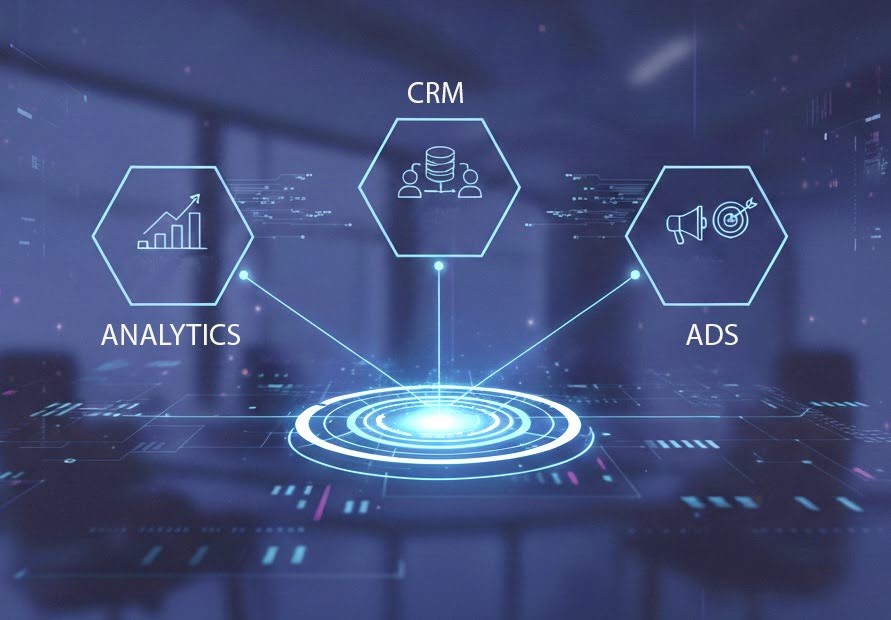
    A high-performing stack generally revolves around three essential, interconnected layers:

    • Analytics: These tools are your eyes and ears, tracking user behavior and overall performance across your digital properties.
    • CRM: This is your central hub for customer intelligence, diligently storing and organizing every piece of customer data.
    • Advertising Platforms: These are the engines that drive targeted traffic and conversions to your offerings.

    When these vital systems operate in isolation, your invaluable data becomes fractured and difficult to interpret. However, when they are seamlessly connected, you unlock a complete and detailed view of every customer’s journey, from their very first interaction to their latest purchase.

    Why Most Marketing Data Falls Short

    Many marketing teams find themselves relying on superficial metrics: clicks, impressions, or perhaps even simple form fills. While these numbers offer some insight, they often fail to paint a complete picture of real business impact.

    The usual culprits behind this data disconnect are threefold:

    • Disconnected Tools: Picture your analytics platform unable to communicate with your CRM or your CRM not syncing gracefully with your ad platforms. This siloed approach creates blind spots.
    • Incomplete Tracking: Not every crucial conversion is captured, particularly offline actions like a significant phone call from a prospect or a follow-up from your sales team that closes a deal.
    • Last Click Bias: Often, the entire credit for a conversion is mistakenly given to the very last touchpoint a customer had. This narrow view completely overlooks the multitude of earlier channels and interactions that subtly influenced their decision throughout their journey.

    Modern measurement demands event-based tracking and sophisticated cross-channel attribution. This approach provides a far more accurate reflection of how users genuinely interact across their various devices and platforms.

    The Core Components of a Smarter Marketing Tech Stack

    Google Analytics 4 stands as a cornerstone of modern analytics. It is specifically engineered to track user behavior across both websites and apps, using an advanced event-based data model. Instead of merely counting sessions and pageviews, GA4 captures a rich tapestry of interactions, from subtle scrolls and clicks to pivotal conversions.

    What makes GA4 so remarkably powerful:

    • It meticulously tracks the entire user journey, even as they move between different devices.
    • It allows for custom event tracking, enabling you to measure precisely what is most meaningful to your business.
    • It integrates seamlessly with advertising platforms, paving the way for significantly better attribution insights.

    However, it is crucial to remember that GA4, by itself, is only part of the puzzle. It masterfully shows you what users do, but it cannot tell you who they are or what unfolds after they become a customer.

    Your CRM is the vital intersection where your marketing efforts directly translate into revenue.

    Robust platforms such as HubSpot CRM or Salesforce serve as the definitive record for all your leads. They track every interaction and, most importantly, connect your marketing campaigns directly to actual sales outcomes.

    This is where you find answers to critical business questions:

    • Which specific leads blossomed into valuable customers?
    • Which marketing campaigns generated the highest quality opportunities?
    • What is the true, comprehensive cost of acquiring each new customer?

    Without the rich data housed within your CRM, any assessment of marketing performance remains profoundly incomplete. We often see this with service-based businesses. A physical therapy clinic may generate leads but lack visibility into which ones turn into booked appointments. A log cabin supplier may receive inquiries but not know what channel drove those quote requests. Connecting CRM data closes that gap.

    Leading ad platforms like Google Ads and Meta Ads thrive on data to optimize their performance.

    When these platforms are properly synchronized with your analytics and CRM, they gain the intelligence to:

    • Optimize for real conversions: Moving beyond mere clicks to focus on actual business outcomes.
    • Improve audience targeting: Leveraging your customer data to precisely reach the right people.
    • Scale campaigns effectively: Directing your budget towards initiatives that undeniably drive revenue, not just fleeting traffic.

    This is where the true competitive advantage emerges. Your advertisements cease to be a shot in the dark; instead, they become intelligent systems that continuously learn and adapt based on actual business results.

    How These Systems Harmoniously Work Together

    When your marketing tech stack is expertly connected, each platform amplifies the strength and effectiveness of the others.

    Step 1: Capture behavior in GA4. Users land on your site, engage with your compelling content, and complete meaningful actions.

    Step 2: Sync conversions to your CRM. These valuable leads are then enriched with their source data and meticulously tracked as they progress through your sales pipeline.

    Step 3: Send revenue data back to ad platforms. Your advertising campaigns now have the precise information they need to optimize based on actual, confirmed results, rather than just initial, top-of-funnel conversions.

    This creates a powerful, self-improving feedback loop, ensuring that your marketing efforts become progressively more efficient and impactful over time.

    What Better Attribution Truly Looks Like

    Attribution is the art of understanding precisely which touchpoints contribute to a conversion.

    A sophisticated marketing tech stack transcends the limitations of simple “last click” attribution. It thoughtfully considers:

    • The first interaction that introduced the user to your brand.
    • The crucial middle touchpoints that steadily built trust and interest.
    • The final actions that led directly to the conversion.

    This holistic approach provides an exceptionally accurate understanding of your marketing performance, empowering you to confidently invest in the channels that genuinely deliver results. 

    Insights from Think with Google consistently emphasize the importance of connecting measurement with real business outcomes, showing how smarter attribution and demand-focused strategies lead to stronger marketing ROI.

    Common Mistakes to Avoid

    marketing tech stack

    Even with the most advanced tools at your disposal, many businesses inadvertently fall into similar pitfalls.

    • Tracking too little or too much: The key is to concentrate on meaningful events that directly reflect your core business objectives. Avoid getting lost in a sea of irrelevant data.
    • Not aligning marketing and sales data: If your CRM and analytics remain disconnected, you are missing critical pieces of the overall customer story.
    • Ignoring offline conversions: Phone calls, crucial in-person meetings, and successfully closed deals must be an integral part of your comprehensive data picture.
    • Over-relying on platform-specific reports: Remember, each advertising platform naturally tells its own version of the story. Your integrated stack should unify these disparate narratives into one coherent truth.

    How to Begin Building a Smarter Stack

    You do not need to repair your entire system overnight. A focused, strategic approach is far more effective.

    • Audit your current tools and carefully review your existing tracking setup.
    • Clearly define your key conversion events and overarching business goals.
    • Connect GA4 seamlessly with your CRM and all your active ad platforms.
    • Establish consistent naming conventions and tracking standards across all your systems.
    • Regularly review and refine your data to ensure accuracy and derive ongoing insights.

    The ultimate aim here is not unattainable perfection, but rather clear data that guides your decisions.

    Bringing It All Together

    A truly well-connected marketing tech stack offers much more than just raw data; it provides invaluable direction.

    When Google Analytics 4, your CRM, and your ad platforms collaborate intelligently, you gain unparalleled visibility into precisely what drives real, tangible results for your business. You can confidently shed assumptions and begin making strategic decisions that are firmly backed by compelling evidence.

    This is how marketing transforms from an unpredictable expense into a predictable, scalable, and revenue-aligned engine for growth.

    Ready to Turn Data into Better Decisions?

    Your marketing tech stack is either a powerful catalyst for growth or a subtle impediment holding you back.

    If you have any doubts about the clarity of your tracking, the accuracy of your attribution, or the seamless flow of your data, the time to act is now.

    If you are not fully confident in how your data flows between platforms, it may be time to take a closer look. At Lazarus Design Team, we help businesses connect their analytics, CRM, and campaigns into one clear system that supports better decisions.

    Get a free marketing tech stack audit  and uncover what your data is really telling you.

  • Landing Page vs. Website Page: What to Use for Lead Gen

    Landing Page vs. Website Page: What to Use for Lead Gen

    When you invest in digital marketing, your goal is clear. You want to generate qualified leads that convert into revenue for your business.

    However, many businesses stumble at a crucial point. They direct valuable traffic to the wrong kind of page.

    You might be running effective paid ad campaigns, publishing engaging SEO content, or launching targeted email sequences. Yet, instead of converting those visitors, your pages might be creating unnecessary friction.

    This is precisely why understanding the distinction between a landing page vs website page is not just a technical detail. It directly influences your lead generation performance and overall return on investment. 

    It also plays a growing role in how your content is interpreted not only by search engines but also by generative AI platforms, which is where strategies like GEO (Generative Engine Optimization) are becoming increasingly important.

    Let us explore this difference to help you make smarter decisions and extract more value from every single click.

    What Defines a Website Page?

    A website page is an integral part of your main site structure. Consider your homepage, service descriptions, an about us section, and your blog articles.

    These pages are designed to inform, educate, and encourage users to explore your business in depth. They are crucial for supporting long-term growth, building brand trust, and enhancing your SEO visibility.

    Typically, a website page includes:

    • Navigation menus that allow visitors to browse your site freely.
    • Multiple internal links to other sections and content
    • Broader messaging that covers various related topics
    • Content primarily designed for discovery and educational purposes.

    For instance, a service page might explain your unique process, showcase successful case studies, and address common client questions. While incredibly valuable, it is not always structured for immediate, singular conversion.

    Website pages play a vital role in your comprehensive marketing ecosystem, especially as both traditional SEO and emerging GEO strategies rely on well-structured, context-rich content to understand and surface your pages. According to Google’s guidelines, well-structured content and strategic internal linking help search engines understand your site better, leading to improved visibility in search results.

    However, they are not always the most effective tool when your objective is a single, focused action from a visitor.

    What Exactly Is a Landing Page?

    A landing page is a standalone web page specifically created for a particular marketing campaign or offer.

    It operates with one clear goal. One singular message. One distinct call to action.

    Rather than presenting users with multiple navigational paths, a landing page removes distractions. It is expertly designed to guide them towards making a single, specific decision.

    A high-performing landing page generally features:

    • A clear and compelling headline that perfectly aligns with the traffic source.
    • Minimal or no navigation elements to significantly reduce user drop off.
    • Focused messaging centered around a single offer or service.
    • A strong, clear call to action that is repeated throughout the page.
    • Trust-building elements such as testimonials, verifiable results, or social proof

    This specific structure is not arbitrary. It is rooted in years of conversion research. Reducing a user’s cognitive load substantially improves their decision-making process.

    Landing pages are purpose-built to convert traffic directly into leads. Their goal is not broad education. It is not to facilitate general browsing.

    They are meticulously engineered for immediate action.

    Landing Page vs Website Page: The Fundamental Distinction

    At first glance, both page types might appear similar. However, their purpose and expected performance are significantly different.

    Website pages are crafted for exploration.
    Landing pages are optimized for conversion.

    Here is the essential difference:

    Website pages bolster SEO, brand authority, and user discovery.
    Landing pages support specific campaigns, paid traffic, and direct lead capture.

    If you direct high-intent traffic to a page with too many choices, you inadvertently dilute the conversion opportunity.

    Conversely, if you send early-stage traffic to a page that pushes too aggressively for a decision, you risk creating friction and deterring potential leads.

    The appropriate page choice fundamentally depends on the user’s intent behind their click.

    When to Leverage a Website Page for Lead Generation

    Website pages undeniably maintain an important role in lead generation, particularly for organic traffic.

    You should opt for a website page when:

    • You are targeting specific SEO keywords and require comprehensive, informative content.
    • Your audience is still in the research phase, comparing various options.
    • You need to establish trust and credibility before requesting a commitment.
    • You are guiding users through a range of services or solutions your business offers.

    For instance, a well-crafted blog post or a detailed service page can effectively introduce your expertise, answer critical questions, and gradually move users closer to a conversion over time.

    These pages perform best when coupled with strong internal linking and clear, strategically placed calls to action throughout the content, especially when built using a structured approach like an on-page SEO strategy.

    When to Utilize a Landing Page for Lead Generation

    Landing pages are the superior choice when your primary objective is immediate action.

    You should use a landing page when:

    • You are actively running paid advertisements such as Google Ads or social media campaigns.
    • You are promoting a very specific offer, like a complimentary consultation or a detailed audit, such as a free case evaluation for a law firm, a foundation inspection for a structural repair company, or a pricing consultation for a log cabin project.
    • You require precise tracking and measurement of conversion rates.
    • You need to align your messaging very tightly with a particular campaign’s focus.

    In these specific scenarios, directing traffic to a general website page introduces too many potential exit points.

    A dedicated landing page skillfully removes that friction, keeping users focused exclusively on converting.

    This distinction is especially critical in paid campaigns where every click represents a cost. Businesses that employ dedicated landing pages for their campaigns observe significantly higher conversion rates compared to those that send traffic to general website pages.

    The Most Common Error Businesses Make

    The biggest and most common mistake is treating all incoming traffic identically.

    A user arriving from a Google search query typically has a different mindset than someone clicking on a highly targeted advertisement.

    If both types of users are directed to the same generic page, you immediately lose relevance and effectiveness. 

    For example, if someone is clicking on an ad for “foundation repair near me,” they expect a clear path to book an inspection, not a general service overview, just as a legal prospect expects a direct case evaluation option rather than a broad informational page.

    Paid traffic generally expects a direct answer and a rapid path to action.
    Organic traffic often requires more context, education, and trust-building content.

    When your designated page fails to match the user’s intent, conversion rates are bound to decline.

    This is not merely a design issue. It is fundamentally a strategic challenge.

    How to Align Page Type with the Funnel Stage

    To achieve the best possible results, you must meticulously match your page type with where the user currently sits in your marketing funnel.

    • Top of funnel
      Utilize website pages and blog content to educate potential customers and attract initial traffic.
    • Middle of funnel
      Employ service pages and compelling case studies to build trust and effectively demonstrate tangible results.
    • Bottom of funnel
      Deploy targeted landing pages to efficiently capture leads with a highly focused, irresistible offer.

    This structured approach creates a much smoother user journey, significantly increasing the likelihood of conversion at every crucial stage.

    Why This Matters for Your Marketing ROI

    Every single campaign you launch represents a valuable investment of time and resources.

    If your pages are not perfectly aligned with user intent, you are inevitably leaving valuable conversions on the table.

    A thoughtfully structured landing page can dramatically boost your campaign performance without requiring an increase in your ad spend, especially when it is built with conversion-focused design principles.

    Conversely, a well-optimized website page can consistently drive organic traffic, steadily feeding your pipeline over the long term.

    The true impact stems from strategically utilizing both page types in concert.

    When you combine robust search engine-optimized pages with high-converting landing pages, you construct a powerful system that supports both sustainable growth and immediate conversion objectives.

    Bringing It All Together

    The choice between a landing page vs website page is not about determining which one is inherently superior.

    It is about precisely selecting the right tool for the right moment and the right user.

    Website pages diligently build trust, establish authority, and enhance overall visibility.

    Landing pages efficiently capture demand and transform incoming traffic directly into valuable leads.

    If lead generation is your primary objective, you absolutely need both working synergistically.

    However, if you are actively running focused campaigns and expecting immediate, measurable results, a highly focused landing page is frequently the critical difference between wasted traffic and genuine conversions.

    Ready to Turn Your Traffic into Leads?

    Your web pages are either effectively guiding users toward a desired action or subtly pushing them away.

    The key difference often boils down to thoughtful structure, crystal-clear messaging, and precise intent alignment.

    If you are looking to improve your lead generation results, it starts with understanding how your current pages are actually performing against your goals.

    At Lazarus Design Team, we help businesses evaluate what is working, where friction exists, and what is holding conversions back. If you are curious how your site is performing and where it can improve, book a quick discussion to assess your pages and uncover new opportunities for growth.

  • What Is RevOps and Why Your Marketing ROI Depends on It

    What Is RevOps and Why Your Marketing ROI Depends on It

    If you’re investing in marketing and feeling a bit lost about what’s driving results, you’re not alone. Many businesses successfully generate traffic, leads, and even sales, yet still have nagging doubts about what’s genuinely working. It’s a common challenge in today’s complex business landscape, especially when managing various digital marketing strategies.

    This feeling of disconnect usually comes down to a lack of seamless alignment between your marketing, sales, and customer success teams. They’re all crucial, but often they’re not working together as harmoniously as they could be, making it difficult to achieve true digital synergy.

    This is precisely where RevOps steps in.

    Understanding what RevOps is and how it functions can genuinely transform how you evaluate performance, fine-tune your campaigns, and consistently grow revenue with a clear sense of purpose. It’s about bringing clarity and efficiency to your entire revenue-generating engine, helping you maximize the impact of every website redesign, SEO strategy, or paid ad campaign.

    What Exactly Is RevOps?

    RevOps, short for Revenue Operations, is a smart, strategic approach that brings your marketing, sales, and customer success teams onto the same page. Their shared mission is to drive predictable and measurable revenue growth, plain and simple.

    Instead of each team working in its own bubble, RevOps encourages them to share data, standardize processes, and integrate their technology. The outcome is a far more connected system where every step of the customer journey is tracked, optimized, and held accountable. It’s about creating a smooth, unified path for your customers, from their first search query to their last successful conversion.

    At its core, RevOps focuses on three vital areas:

    • Data Alignment: Making sure all teams are using the same accurate and up-to-date information. No more conflicting spreadsheets or disparate reporting from your SEO, paid search, and social media efforts!
    • Process Optimization: Crafting consistent, efficient workflows that stretch across the entire journey, from a prospect’s first glance at your website to a customer’s long-term loyalty. This includes how leads from your digital campaigns are captured and handed off.
    • Technology Integration: Connecting tools like your CRM, analytics platforms, and marketing automation systems so they all talk to each other seamlessly. This ensures that data from your website analytics, email marketing, and lead generation forms are all unified.

    When these pieces click into place, businesses gain a super clear view of how prospects move from their very first interaction with your online presence all the way to becoming a loyal customer.

    Why RevOps Is a Game-Changer for Your Marketing ROI

    Your marketing ROI is only as strong as your ability to accurately track and attribute results. Without RevOps, marketing teams often hit familiar roadblocks:

    • Lost Leads: Promising leads generated by your website design or paid ad campaigns might not get the follow-up they need from sales, essentially falling through the cracks.
    • Chaotic Data: Inconsistent information across different platforms makes it hard to get a real picture of what’s happening, especially when combining data from SEO performance, social media engagement, and email marketing.
    • Confused Attribution: It’s tough to tell which specific channels or campaigns, whether it’s an organic search result, a social media post, or a targeted ad, truly deserve credit for conversions and revenue.
    • Revenue Mystery: Connecting marketing efforts directly to actual revenue can feel like a guessing game, making it hard to justify investments in crucial digital strategies.

    RevOps tackles these problems head-on by building a unified system where every single interaction is measurable. This means you can finally get solid answers to crucial questions like:

    • Which marketing channels, including your SEO efforts and paid search campaigns, are consistently bringing in the most qualified leads?
    • What specific campaigns, like a newly designed landing page or a targeted social media push, are influencing revenue, not just website visitors?
    • Where are prospects getting stuck or dropping off in your sales funnel, indicating potential areas for website optimization or content improvement?
    • How long does it typically take to turn a new lead, perhaps from a website form or a content download, into a paying customer?

    With this level of clear visibility, marketing stops being seen as just another cost and truly becomes a powerful driver of growth for your business, allowing you to prove the value of every digital strategy implemented.

    Key Ingredients for a Strong RevOps Strategy

    A successful RevOps framework is built on solid foundations: alignment, visibility, and accountability. Let’s look at what that practically means.

    1. A Unified Customer Journey

    Every single touchpoint, from that initial website visit to ongoing engagement long after a sale, should be connected and understood. This means mapping out your entire funnel, including:

    • Awareness and Acquisition: How do people first find you? This often involves strong SEO strategies to rank high in search results, effective paid search campaigns to capture immediate interest, and engaging social media marketing to build brand presence.
    • Lead Capture: Where do prospects officially become leads? This is where a well-designed website, compelling landing pages, and clear calls-to-action really shine.
    • Sales Interactions: Every conversation and step taken by your sales team is meticulously logged and tracked.
    • Onboarding and Retention: How you welcome new customers and keep them happy, often supported by automated email sequences and personalized follow-ups.

    When this journey is unified, it becomes much easier to spot any gaps or areas needing improvement in your digital pathways.

    2. Clean and Connected Data

    Data is the backbone of RevOps. But it’s not just any data; it needs to be accurate, consistent, and easily shared across all your systems. This usually involves:

    • Standardizing Names: Using the same terms for everything, from campaign names to lead sources across your Google Analytics, CRM, and marketing automation platforms.
    • Clearing Duplicates: Getting rid of repeated or conflicting records to keep your data tidy, ensuring that every lead is counted once and correctly attributed.
    • Syncing Platforms: Making sure your CRM, analytics tools, and marketing platforms are all talking to each other. This is crucial for understanding the full journey from a website visit to a closed deal.

    When your data is clean and connected, your insights become genuinely actionable, helping you make smarter decisions about everything from website content to ad spend.

    3. Clear Attribution Models

    Figuring out who gets credit for a sale can be tricky. RevOps helps define how credit is assigned across all the different touchpoints a customer has with your brand. Whether it’s giving credit to the first interaction, the last, or a mix of touches along the way, this clarity allows you to:

    • Invest Smarter: Put your money into the channels that are truly driving revenue, whether it’s a robust SEO strategy, a targeted paid ad, or a strong social media presence.
    • Avoid Distractions: Don’t get sidetracked by metrics that look good but don’t impact the bottom line, allowing you to focus on real business growth.
    • Understand Impact: See the real effect your various digital campaigns are having on your business.

    4. Strong Sales and Marketing Alignment

    One of the biggest drags on ROI is when sales and marketing aren’t on the same page. RevOps ensures both teams agree on crucial aspects like:

    • What Makes a Lead: A shared definition of what a qualified lead from your website or marketing campaigns looks like.
    • Sales Readiness: Knowing exactly when a lead generated by a content download, or a contact form, is ready for sales to step in.
    • Follow-Up Rules: Clear guidelines for how leads should be nurtured and followed up, ensuring no promising prospect is forgotten.
    • Defining Success: What does a “win” look like for both teams, from increasing website traffic to closing high-value deals?

    This alignment reduces friction, speeds things up, and ultimately leads to better conversion rates across the board.

    5. A Commitment to Continuous Optimization

    RevOps isn’t a one-and-done project. It’s an ongoing cycle of testing, learning, and improving. With the right systems in place, you can:

    • Spot Bottlenecks: Quickly identify and fix issues in your processes, whether it’s a slow-loading page impacting user experience or a snag in your lead handoff.
    • Adjust Campaigns: Tweak your marketing efforts, from refining ad copy for paid search to updating website content for SEO, based on real-time performance data.
    • Boost Conversions: Continuously refine each stage of your funnel to get better results, ensuring your website design and digital strategies are always performing optimally.

    Over time, these smaller, consistent improvements add up to significant revenue growth.

    Signs That Point to a Need for RevOps

    If you’re wondering whether RevOps is something your business needs to consider, here are some clear indicators:

    • You can’t confidently connect your digital marketing efforts directly to your revenue figures.
    • Your CRM data feels messy, incomplete, or just plain inconsistent with your website analytics.
    • Your sales and marketing teams often feel like they’re operating in separate universes, rather than as a unified force for growth.
    • You frequently rely on gut feelings or guesswork when making important budget decisions for your SEO, paid ads, or website development.
    • Your conversion rates swing unpredictably without clear explanations, making it hard to pinpoint what’s working and what isn’t.

    If any of this sounds familiar, implementing RevOps can bring immediate clarity and a fresh perspective to your operations, especially when optimizing your digital presence.

    How RevOps Transforms Your Funnel

    When RevOps is properly put into practice, your entire funnel becomes much more predictable and efficient. Instead of a series of disconnected steps, you gain a system where:

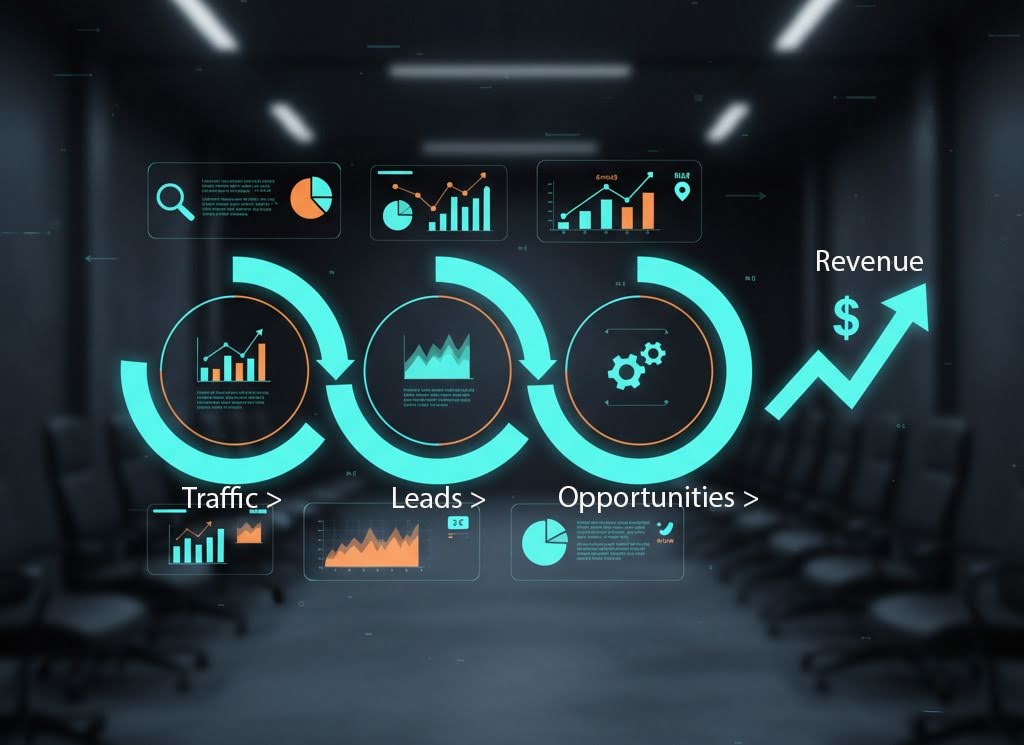
    • Traffic from your optimized website and ad campaigns is clearly linked to leads.
    • Leads seamlessly connect to opportunities.
    • Opportunities directly translate into revenue.

    This transformation lets you move from constantly reacting to problems to proactively planning for growth. It also frees up your team to focus on what truly drives results, rather than chasing surface-level numbers.

    Bringing It All Together

    RevOps isn’t just a fad; it’s a fundamental shift in how modern businesses approach growth. By aligning your teams, connecting your data, and optimizing your processes, you gain the deep visibility needed to make smarter choices and truly maximize your marketing ROI. This holistic approach ensures every aspect of your digital strategy, from SEO to website design, contributes effectively.

    Without it, even your best campaigns might struggle because the underlying system isn’t built to support lasting growth.

    With RevOps, every part of your funnel works together, like a well-oiled machine, all focused on one clear goal: boosting your revenue.

    Your Next Step: Building a Unified Strategy

    Ready to stop guessing and start growing with confidence? A well-executed RevOps strategy is your blueprint for predictable revenue. Let’s explore how integrating your marketing, sales, and customer success can unlock your business’s full potential.

    Reach out to Lazarus Design Team today for a consultation on optimizing your digital presence and revenue operations.