Most businesses do not struggle because they chose the wrong digital marketing strategy. They struggle because they wait too long to choose one at all.
At some point, nearly every business owner hits the same crossroads when planning growth. Should you invest in SEO for long term visibility, or put your budget into paid ads for faster results?
Both paths offer the same golden prize. They get your business and its brand visible on Google. They both bring in traffic, generate leads, and ultimately drive revenue. But under the hood, they run on completely different engines. Deciding which one to fuel up first will have a massive impact on when you start seeing a return on your investment.
Understanding how these two channels work and when each one makes sense can help you move forward with confidence instead of staying stuck in the debate.
Here at Lazarus Design Team, we act as an extension of your own company, and this exact debate is one of the most frequent chats we have with business owners. The truth is that there is no one-size-fits-all answer. The smartest move always comes down to your unique timeline, your big picture growth goals, and the current stage of your business.
Let us dive deep into the great debate of SEO vs paid search. We will explore how each powerhouse channel operates, what makes them unique, and exactly how you can figure out where to place your initial investment to get the best measurable results.
Understanding the Real Difference Between SEO and Paid Search
When you first look at them, SEO and paid ads might seem like two sides of the same coin. The goal for both strategies is to put your website directly in front of buyers who are actively searching for the exact solutions you offer.
But the way they capture that attention is night and day.
Search Engine Optimization, or SEO, is all about earning your spot organically. When a potential customer types a question related to your industry into Google, your website pops up simply because the search engine views your page as the most helpful, relevant, and trustworthy answer available.
Earning those top organic spots is a beautiful blend of art and science. It requires multiple moving parts working together perfectly. You need a fast and technically sound website. You need high-quality content that genuinely helps people. You need a strategy and plan with smart keyword targeting. You also need backlinks from other respected sites to prove your authority, along with a fantastic user experience that keeps visitors engaged.
As time goes on, all these signals prove to Google that your business deserves the spotlight.
On the flip side, paid search takes a much more direct route. Often called PPC (pay-per-click) or Google Ads, this strategy simply skips the line. Instead of slowly proving your worth to the algorithm, you pay for prime real estate right at the very top of the search results for specific keywords.
Your success in the paid space relies on a completely different set of rules. Your daily budget and bidding strategy play a huge role. The relevance of your ads and your overall quality score matter just as much. Plus, the experience users have once they click through to your landing page will dictate how well those ads convert into paying customers.
Paid search can flip the switch and bring visitors to your site very quickly. But there is a catch. In paid search, you are competing with other businesses primarily through budget. The companies willing to invest more often gain more visibility. The moment your ads stop running, the traffic stops as well.
That right there is the fundamental difference between the two approaches. SEO builds a lasting digital footprint over time, while paid search buys you immediate visibility exactly when you need it.
The Timeline Factor and Why Speed Matters
When we talk about SEO vs paid search, time is usually the biggest deciding factor for our clients.
Paid search is incredibly fast. You can build a campaign, write your copy, and launch it all in just a few days. Once those ads go live, your business can start seeing new website visitors in a short time. If you are in a tight spot and need leads right now, that kind of speed is an absolute lifesaver.
Paid traffic works almost like a faucet. Once a campaign is live and Google has had some time to learn and optimize delivery, traffic can begin flowing much faster than most other marketing channels. But the moment you pause your budget, that flow stops. The visibility you were paying for disappears as quickly as it arrived.
SEO operates on a completely different timeline. It demands patience, consistency, and a long-term mindset. Search engines need time to crawl your website, evaluate your content, and weigh your authority against competitors. With paid search, you are competing with the budget. With SEO, you are competing with expertise. One often rewards the deepest pockets, while the other rewards the most helpful and authoritative answer. In competitive markets, it can take several months before rankings begin to climb.
The beauty of SEO is what happens once that traction kicks in. The growth compounds. A single piece of optimized content that ranks on the first page can bring in hundreds of targeted visitors every single month. And it can do that for years without you paying a single dime for those clicks.
To put it simply, paid search gives you that quick win today, while SEO builds the unstoppable momentum you need for tomorrow.
Renting Digital Space vs Building a Real Asset
Another massive difference between SEO and paid search is how you spend your marketing dollars over time.
With paid search campaigns, you pay a fee every single time someone clicks on your ad. Depending on your specific industry and how badly your competitors want that same click, the cost can be very high.
When you run ads, you are basically renting attention from Google. It is a fantastic short-term lease. Your brand stays highly visible as long as you keep paying the rent. But the moment you decide to cut the budget, your presence vanishes from the top of the page.
SEO takes a much more foundational approach. It requires a solid upfront investment in strategy, technical web development, and ongoing content creation. Yes, this takes resources and hard work at the beginning. But what you are really doing is building a permanent digital asset for your business.
Once your website starts dominating the organic rankings, the traffic it brings in does not cost you anything per click. If ten people visit your site or ten thousand people visit your site, your cost remains the same.
This compounding return on investment is exactly why SEO eventually becomes the most cost-effective way to acquire new customers. Paid search lets you buy your way to the top today, but SEO builds a self-sustaining revenue engine for the future.
Visibility and Trust in the Search Results
There is a psychological element to this debate that a lot of business owners completely overlook. It comes down to how real human beings view the search results.
When someone goes to Google looking for a new service provider, they see a mix of sponsored ads and organic links. Even though the ads are positioned right at the top, a huge percentage of people will naturally scroll right past them to click on the organic results below.
Why do people do this?
It all comes down to trust. People are smart. They know that the organic spots were earned through merit and quality, not just bought with a large marketing budget. Because of this, companies that rank high organically enjoy a massive boost in instant credibility. The searcher assumes you are the best in the business simply because Google put you there naturally.
Now, this does not mean paid search is a waste of time. Ads still capture a massive number of high-intent clicks from people who are ready to buy right then and there.
But the real magic happens when you show up in both places. If a potential client sees your ad at the top and then sees your website again in the organic results a few seconds later, you suddenly dominate their screen. That double exposure reinforces your brand authority and makes it incredibly likely that they will click on your site instead of your competitors.
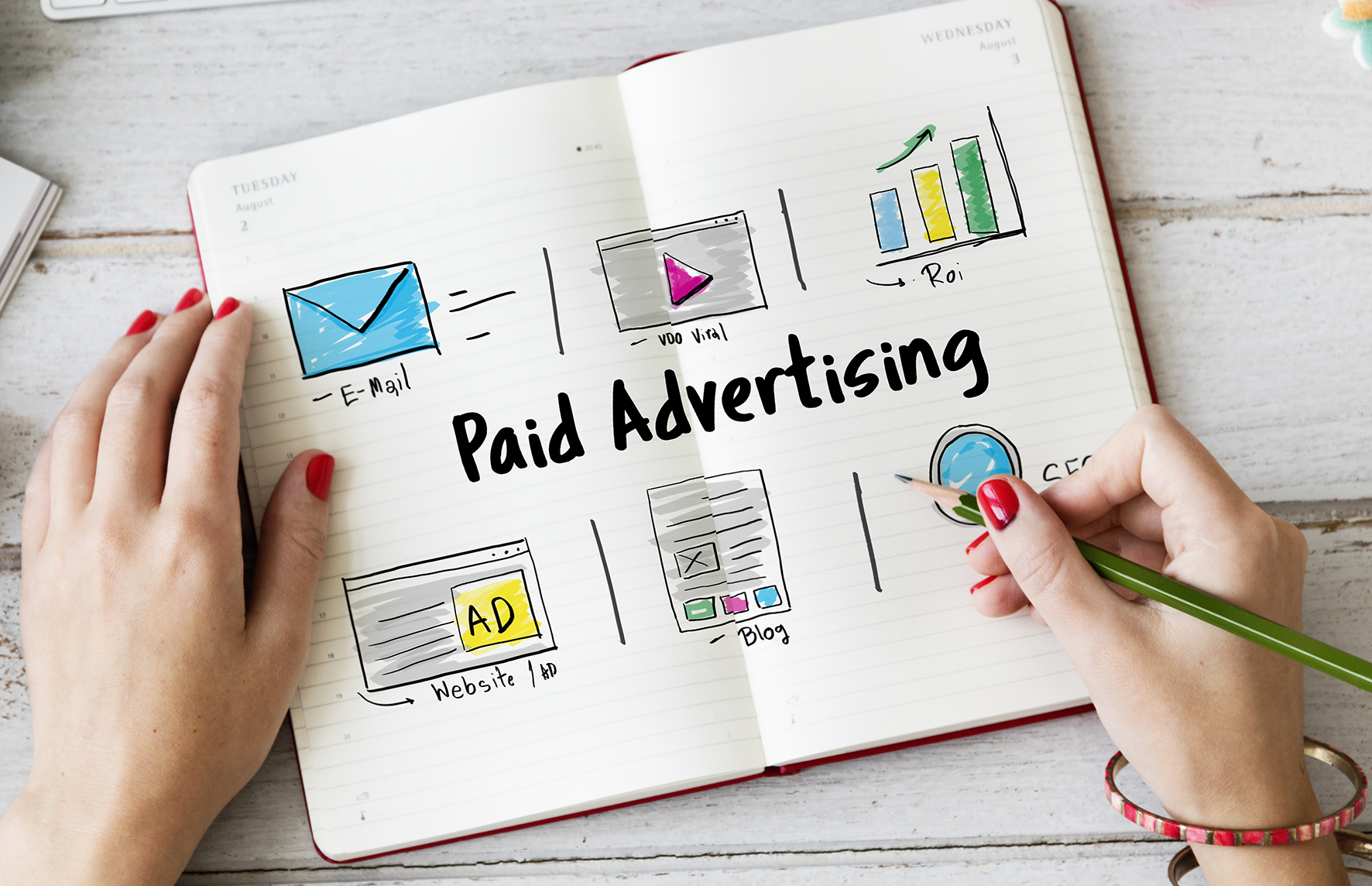
How Paid Ads Accelerate Your Learning and Data
One massive advantage of running paid search that we love to utilize is the pure speed of data collection.
When you launch a Google Ads campaign, performance insights begin to appear fairly quickly. Although Google’s system needs a short learning period to optimize bidding and targeting, you can soon start seeing which keywords generate traffic, which ad headlines attract clicks, and which landing pages convert those visitors into paying clients.
This creates a rapid feedback loop. You get hard numbers in a matter of weeks instead of waiting months to see if an SEO strategy is paying off.
The smartest marketing teams use this exact paid data to fuel their long-term SEO strategy. If you notice that a specific group of keywords is consistently driving cheap conversions in your ad account, those are the exact topics you should target with your organic content.
Using ads as a testing ground takes a bit of the guesswork out of your marketing. It ensures that when you finally invest time and money into ranking organically, you are doing it for keywords that you already know will make you money.
When Paid Search Should Be Your First Move
There are times when firing up a paid search campaign is the smartest first step for your business.
If you need leads right away to keep the lights on, paid search is your best friend. It delivers results incredibly fast. This is especially vital for brand new startups or companies trying to break into a highly competitive market where the big players already dominate the organic space.
Paid search is also perfect when you are launching a new product or service. You can instantly push your new offering right in front of your ideal buyers while your long-term organic presence is still baking in the oven.
If you just launched a new website, it is going to take time to build up your domain authority. Paid ads bridge that gap. They give you the visibility and potential cash flow you need to survive while your SEO efforts slowly gain traction in the background.
Finally, paid ads are the ultimate testing tool. They let you experiment with different sales pitches, special offers, and landing page designs to see what your audience responds to.
In all these scenarios, paid search acts as pure rocket fuel for your business growth.

When SEO Should Be Your Top Priority
On the flip side, focusing heavily on SEO from day one is often the best path for companies looking at the bigger picture.
If sustainable growth is your goal, you need organic traffic. It provides a steady and reliable stream of leads that does not vanish the second you lower your marketing budget.
You also must look at the cost of advertising in your specific industry. In some B2B fields, the cost per click is just outrageously high. If you are paying a very high price just to get someone to click your link, investing that same money into ranking organically will drastically lower your customer acquisition costs over time.
SEO is also essential if your service requires a lot of education. If you sell complex services or high-ticket items, people rarely buy on impulse. They need to research, read, and build trust before they pull out their credit card. A strong SEO content strategy lets you answer their questions and guide them smoothly through the buying journey.
Ranking for these educational topics does something else, too. It positions your business and its brand as a true industry leader and a helpful resource, rather than just another company shouting for attention with an ad.
In these cases, SEO becomes the absolute bedrock of your demand generation strategy.
Why the Most Powerful Growth Strategy Combines Both
The whole conversation surrounding SEO vs paid search almost always treats them like bitter rivals. People think they must pick a side.
But the reality is that the most successful companies out there do not choose. They combine them.
Paid search gives you that instant visibility and incredible market data. SEO builds your long-term brand authority and secures a sustainable flow of traffic. When you put them together, they make each other stronger.
You can use your quick paid campaigns to find the most profitable keywords and then hand those keywords over to your SEO team to build lasting content around. At the same time, the high-quality content you create for SEO can be used as landing pages for your paid ads. Better content means a better user experience, which lowers your ad costs and boosts your conversion rates.
Plus, showing up in both the paid and organic sections of Google tells the searcher that you are the undisputed leader in your space.
Instead of looking at them as competing options, you should view SEO and paid search as two gears working together in a much larger revenue engine.
Step 7: Rebuild & Protect SEO Foundations
Pay close attention to this step. This is the exact phase where poorly managed redesigns unintentionally wipe out years of hard-earned organic search growth overnight.
Before you even think about launching the new site, you must conduct a thorough, meticulous SEO and keyword audit of your current site. You need to identify exactly which pages are currently driving your most valuable organic traffic and conversions. Whenever humanly possible, you must preserve these high-performing URLs exactly as they are.
If your URL structures absolutely must change, you must create a comprehensive 301 redirect map. One failed migration can instantly dissolve all your hard-earned backlinks, deeply confuse search engines, and tank your rankings. We have seen businesses come to us after losing 80% of their organic traffic simply because a previous developer decided to skip this crucial step.
As you migrate content, ensure you update your title tags, meta descriptions, image alt text, and heading structures to reflect the most current SEO best practices. Maintain a strict, logical H1-H2-H3 hierarchy across all your pages to make scanning easy for both human readers and search engine crawlers.
A new website should act as a multiplier for your existing SEO performance; it should never reset your progress back to zero.
How to Decide Where to Put Your Money First
If you are still trying to figure out where to start your journey, sitting down and asking yourself three simple questions can usually clear things up.
First, how quickly do you absolutely need to see a return on your investment? If speed is the priority, paid search is where you need to begin.
Second, what do your long-term growth goals look like? If you want to build a resilient business with a durable source of incoming leads, SEO simply must be part of your foundation.
Third, what kind of resources are you working with right now? SEO requires a commitment to creating great content and optimizing your site over months. Paid search requires a healthy and ongoing advertising budget to keep the clicks rolling in.
Your honest answers to these questions will point you in the right direction.
Bringing It All Together for Your Business
The great debate of SEO vs paid search is never about figuring out which channel is inherently better. It is entirely about understanding how each strategy supports a different phase of your business growth.
Paid search brings you speed, rapid testing, and visibility exactly when you need it. SEO builds deep trust, unwavering authority, and a traffic source that lasts for years.
The companies that experience the most explosive growth understand this completely. They know that a truly healthy digital marketing strategy requires a careful balance between creating short-term cash flow and building long-term digital equity.
Not sure whether SEO or paid search should come first for your business? The right answer depends on your goals, your timeline, and how your market works. That’s where Lazarus comes in. We don’t make you choose. We help you build both as one integrated strategy. One team managing your paid visibility while your organic authority compounds in the background. No handoff, no gaps, no guesswork. Reach out to our team to start a conversation about the best path forward for your business.